

Running from June 25 to 27, the 2021 Belt-and-Road Forum on Bionic Innovative Design Industrialization was successfully hosted. As one of the serial events of the 2021 Nanjing Innovation Week, the forum took place at the Conference Center of Lishu District Party School in Nanjing.
Scholars from 34 universities and research institutes including Tsinghua University, Beihang University, Southeast University, Shanghai Jiao Tong University and Nanjing University of Aeronautics and Astronautics gathered for the event. Academics and academicians from top-tier overseas universities such as Kiel University and the University of Hamburg in Germany, Nanyang Technological University and the University of Tokyo also attended (some via online channels) to conduct academic exchanges on bionic innovative design in the new era.
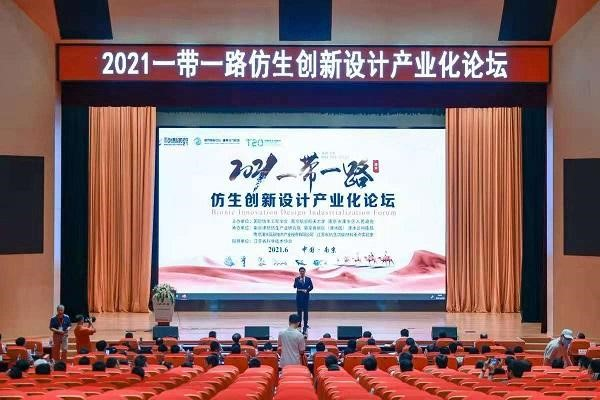
Organized by the International Society of Bionic Engineering, Nanjing University of Aeronautics and Astronautics and the People’s Government of Lishui District, Nanjing, the forum was undertaken by Nanjing Lihang Bionic Industry Research Institute, Nanjing High-Tech Zone (Lishui Park), Nanjing Lishui High-Tech Industry Investment Co., Ltd., Jiangsu Key Laboratory of Bionic Functional Materials and Nanjing Adhesion Technology Co., Ltd.
Professor Dai Zhendong from Nanjing University of Aeronautics and Astronautics served as the forum chairperson. Zhang Zhihui, Secretary-General of the International Society of Bionic Engineering, and Wang Tao, General Manager of Lishui High-Tech Industry Investment Co., Ltd., delivered speeches respectively. Tai Zhenhua, Deputy Director of Lishui District Bureau of Science and Technology, gave an informative presentation on local science-and-technology policies of Lishui District.
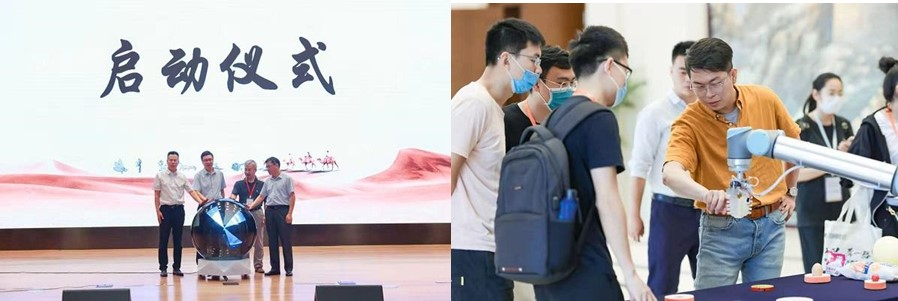
At the forum, Professor Stanislav N. Gorb, Member of the German National Academy of Sciences and Humanities as well as the German National Academy of Sciences from Kiel University in Germany, delivered an online presentation titled Industrial potential of studies on biological surfaces. Professor Zhang Jianwei, Member of the German National Academy of Science and Engineering from the University of Hamburg, gave an-online speech named Cross-modal Learning in Human and Robot.
Professor Feng Xiqiao from Tsinghua University kicked off the keynote session with the report Wetting Kinetics of Biomaterial Surfaces. He elaborated on micro-nano-scale surface-wetting effects, quantitative models for the structure-property-function correlation of wetting mechanics, thermal and electrical effects during surface wetting, together with relevant industrial and daily-life-oriented research.
Professor Zhang Deyuan from Beihang University presented Interfacial Energy-Field Effects in Micro-Nano Bionic Manufacturing. He analyzed the innovative bionic vibration cutting method and interfacial energy-field effects in bionic forming fabrication.
Professor Gu Zhongze from Southeast University delivered the speech Bionic Micro-structured Materials Based on 3D Laser Printing and introduced the high-efficiency controllable-preparation technique for bionic micro-structures via two-photon polymerization.
Professor Wang Hesheng from Shanghai Jiao Tong University reported on Robot Visual Servoing, introducing vision-based autonomous landing for ship-borne unmanned aerial vehicles and contact-control technology for flying manipulators.
Professor Dai Zhendong of Nanjing University of Aeronautics and Astronautics reviewed bionics and its related technical industries, and prospected the industrialization of bionic technologies and the practical deployment of gecko-inspired adhesion technology.
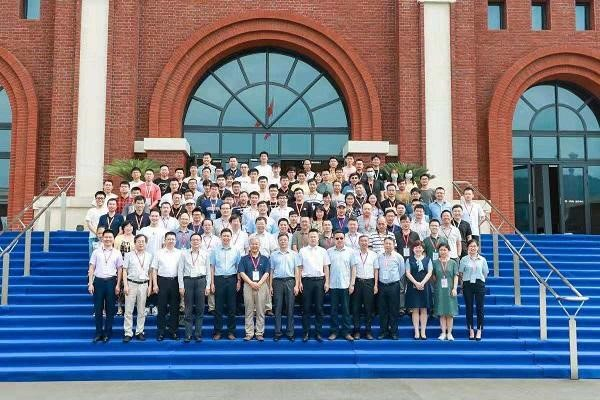
During the forum, experts exchanged research outcomes, kept abreast of front-line advances in bionic engineering and gained fresh inspiration for scientific research. This high-profile international gathering brought together professionals across the bionics discipline.
The conference yielded fruitful achievements and won favourable feedback from all participants. Attendees spoke highly of the distinguished expert panel, participant scale, keynote quality and overall event organisation.
The successful session showcased cutting-edge international research advances in bionic engineering over recent years. It facilitated extensive international academic exchanges and collaboration within engineering bionics, and carries great significance for the global advancement of bionic-related disciplines.