

The research group led by Professor Shao Jinyou from Xi'an Jiaotong University has long committed itself to the research and development of intelligent bionic machinery and its practical applications. The team has designed a hierarchical structure integrating adhesion and perception. By ingeniously embedding a “nerve-like” sensing unit into the bionic architecture, the researchers put forward the innovative concept of contact-sensible bionic adhesion. This marks a breakthrough from conventional structural-oriented bionics toward function-oriented bionic research.
In collaboration with Professor Zheng Zijian from the Hong Kong Polytechnic University, the team recently published their research advances in Advanced Functional Materials under the title Bioinspired Hierarchical Structures for Contact-Sensible Adhesives.
1. Design of Hierarchical Contact-Sensible Adhesive Structure
The researchers adopted mushroom-shaped microstructures with outstanding adhesion property as the top adhesive layer, and employed discretely-supported micropillar arrays as the substrate for integrating capacitive-type force sensors (Figure 1, left).
When subjected to external load, the bottom-layer structure undergoes obvious deformation and changes the electrode-to-electrode distance. Corresponding capacitance-response curves are therefore generated to realise force-sensing capacity.
Experimental results demonstrate that the proposed hierarchical structure possesses excellent adhesion performance and rapid responsiveness to tensile, compressive and shear forces. It satisfies practical application demands under complicated coupled-force conditions (Figure 1, right).
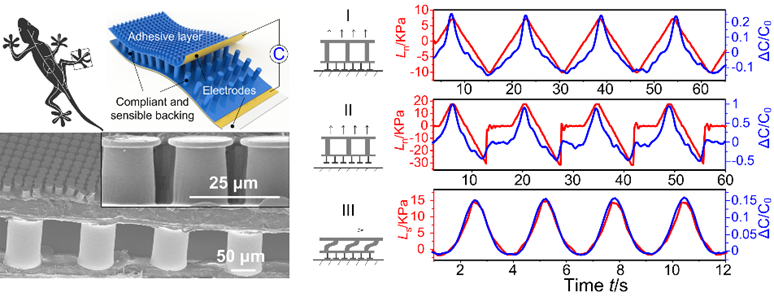
Figure 1 Design of the hierarchical structure and its load-response behaviour
2.Quantitative Relationship Between Sensing Performance and Structure
As one of the most critical engineering parameters for sensors, sensitivity directly determines data accuracy in practical deployment. Through extensive experiments and theoretical calculations, the paper reveals that under diverse loading conditions and deformation modes, sensitivity can be expressed by a simple power-law formula related to the structural aspect ratio and duty cycle (lateral area occupancy). This finding furnishes theoretical support for the subsequent design of adhesive structures.
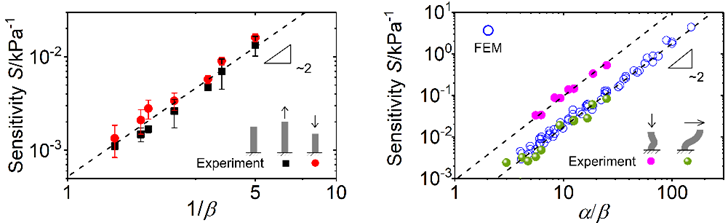
Figure 2 Quantitative correlation between sensor performance and geometric dimensions