

Rapid modulation of normal-direction adhesion and tangential-direction friction constitutes the fundamental interfacial contact mechanics that enable climbing locomotion for geckos, spiders, katydids and locusts.
Apart from hooked claws, the universal attachment structure for rough substrates, creatures commonly adopt micro-nano seta arrays or compliant smooth friction pads on their plantar surfaces to switch adhesion, friction and detachment when confronting relatively smooth surfaces. Driven by the intrinsic actuation of biological foot-pad tissues, interfacial adhesion and friction vary instantaneously via the adjustment of contact area. Such behaviour permits stable attachment and fast attachment-detachment during climbing movements.
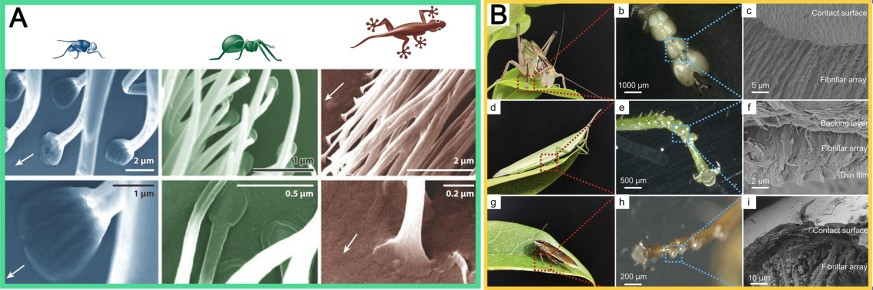
Figure 1 Two typical friction-enhancing and adhesion-boosting plantar structures of natural climbing creatures: micro-nano seta arrays (Annual Review of Materials Research, 2014, 44.1: 173-203) and compliant smooth friction pads (Tribology International, 2023, 189: 108973)
During the development of bioinspired adhesion technology, the responsiveness, reliability and cost-efficiency of adhesion-detachment switching directly determine its progress of engineering deployment in interfacial manipulation. In recent years, domestic and overseas researchers have realised bio-inspired adhesion-detachment regulation through thermal, optical, electrical and magnetic stimulation, as well as angle adjustment of gecko-mimicking setal structures. Some devices have achieved performance comparable to biological attachment-detachment behaviour, laying a foundation for the practical engineering adoption of bionic adhesion techniques. Nevertheless, research on tunable friction and adhesion properties of compliant smooth friction pads dominated by tangential friction remains underexplored.
Recently, the research group led by Ji Keju and Dai Zhendong from the College of Mechanical and Electrical Engineering, Nanjing University of Aeronautics and Astronautics, has cooperated with Academician Stanislav N. Gorb’s team at Kiel University, Germany. Their latest study published in Advanced Functional Materials demonstrates bidirectional dynamic tuning of adhesion and friction on curved compliant smooth pads. This is realised via vibration-triggered deformation of curved-pad structures with gradient modulus, offering an innovative technical route for controllable adhesion of bionic friction materials.
Taking the curved compliant smooth friction pad on the bush-cricket planta as the bionic prototype, the research team combined magnetically-controlled gradient modulus tuning and micro-nano fabrication technology. Four structural parameters, namely curvature radius (R), contact-layer thickness (T), support-layer diameter (D) and gradient magnitude (G′), were optimised to fabricate bio-inspired curved compliant smooth friction pads.
The gradient-distributed magnetic particles inside the friction-pad structure facilitate adaption to rough substrates under low pre-compression and guarantee structural stability under loaded conditions. The as-prepared pad delivers outstanding interfacial shear strength (>130.0 kPa) and remarkable environmental adaptability for target substrates: tolerable surface tilt ≥ 3°, surface roughness Ra ≥ 0.8 μm and vibrating working conditions of 400 Hz with 60-μm amplitude.
The team experimentally investigated the bidirectional adhesion-and-friction modulation mechanism triggered by micro-vibration. Fast attachment-detachment switching within 30 ms was realised. This response speed is one-order-of-magnitude faster than human eyeblinking (100-400 ms) and comparable to the gecko’s switching time of roughly 15 ms. The adhesion-detachment switching ratio reaches 46.8 and the switching efficiency hits 97.9 %.
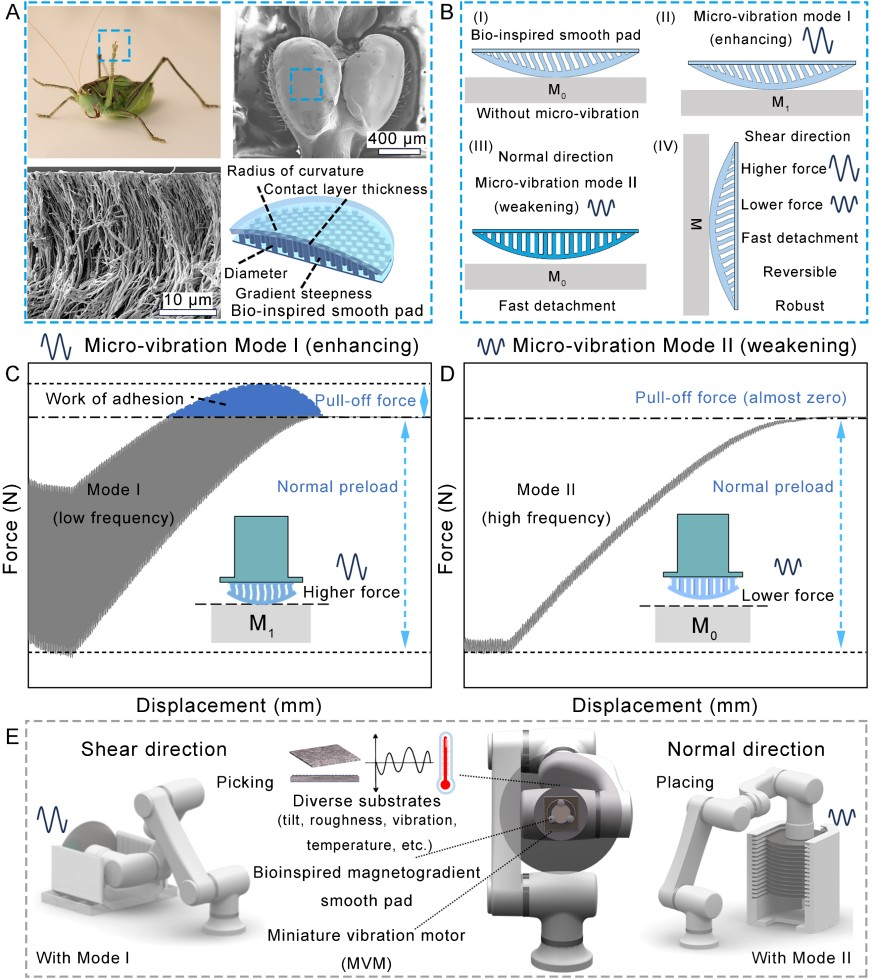
Figure 2 Bionic design principle of compliant smooth friction pad and vibration-tuned adhesion-friction modulation mechanism
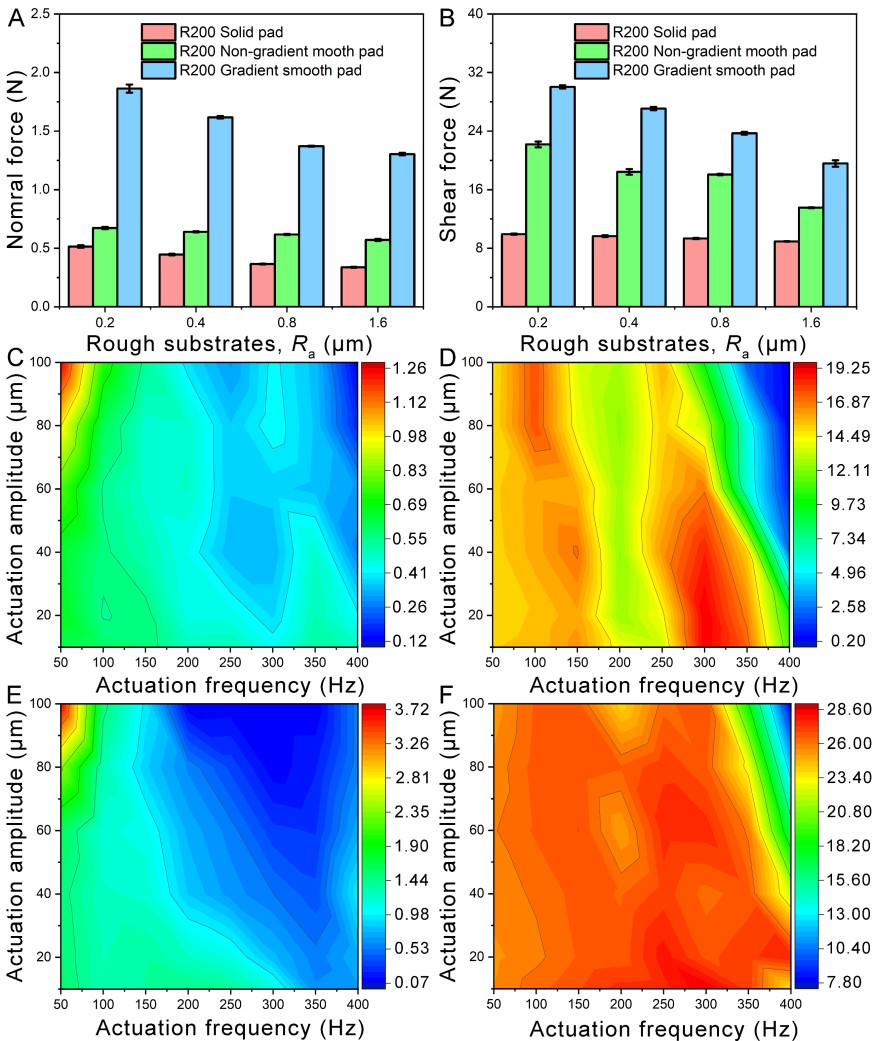
Figure 3 Variations in normal-direction adhesion and tangential friction performances of compliant smooth friction pads against vibration-related influencing factors
The researchers explored the adhesion-detachment switching mechanism of compliant smooth friction pads dependent upon vibration frequency and amplitude, in which vibration modulation acts as a vital switch. Experimental results reveal that vibrations of distinct frequencies trigger completely different interfacial effects. Low-frequency vibration (0.1-100 Hz) strengthens attachment under elastic-dominated mode (Mode I), while high-frequency vibration (101-400 Hz) weakens attachment via viscous dissipation (Mode II). Such frequency-selective transformation mechanism of adhesion-energy enables adhesion-detachment switching merely by tuning vibration parameters. An instant mapping relationship is established between the responsiveness of vibration parameter adjustment and attachment-detachment switching speed.
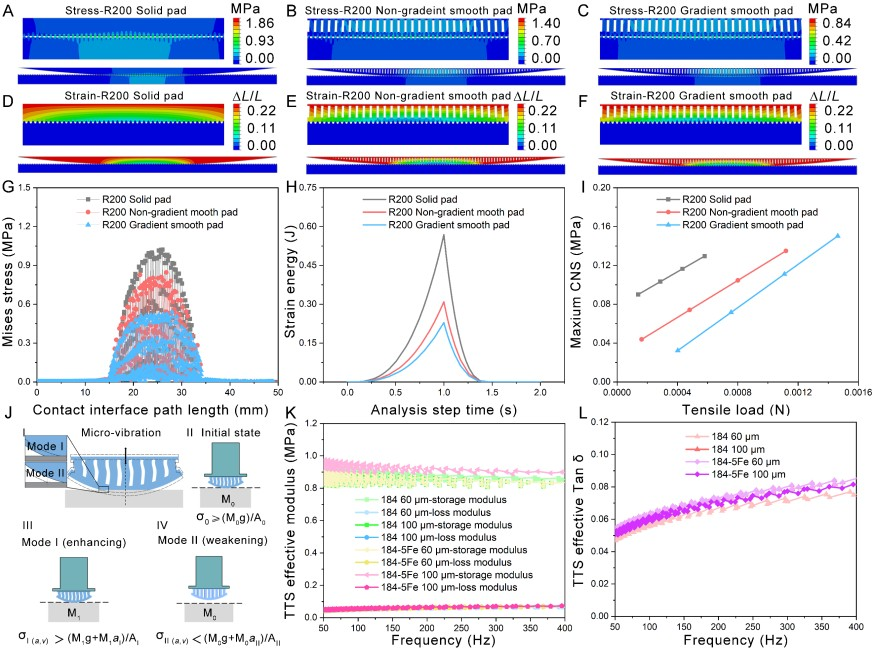
Figure 4 Analysis and simulation of the multi-physical-field (vibration-stress-energy dissipation) coupling mechanism for dynamically tuned adhesion and friction
This technology establishes a vibration-driven switching medium for the mechanical behaviours of friction and adhesion. Programmed vibration parameters permit ultrafast real-time regulation of contact stress in both the normal adhesion and tangential-direction friction dimensions. The presented bionic structural design and external-field-stimulated behaviour-modulation strategy can be applied to intelligent gripping end-effectors, bionic wall-climbing robots, high-efficiency conveying equipment and other relevant fields.
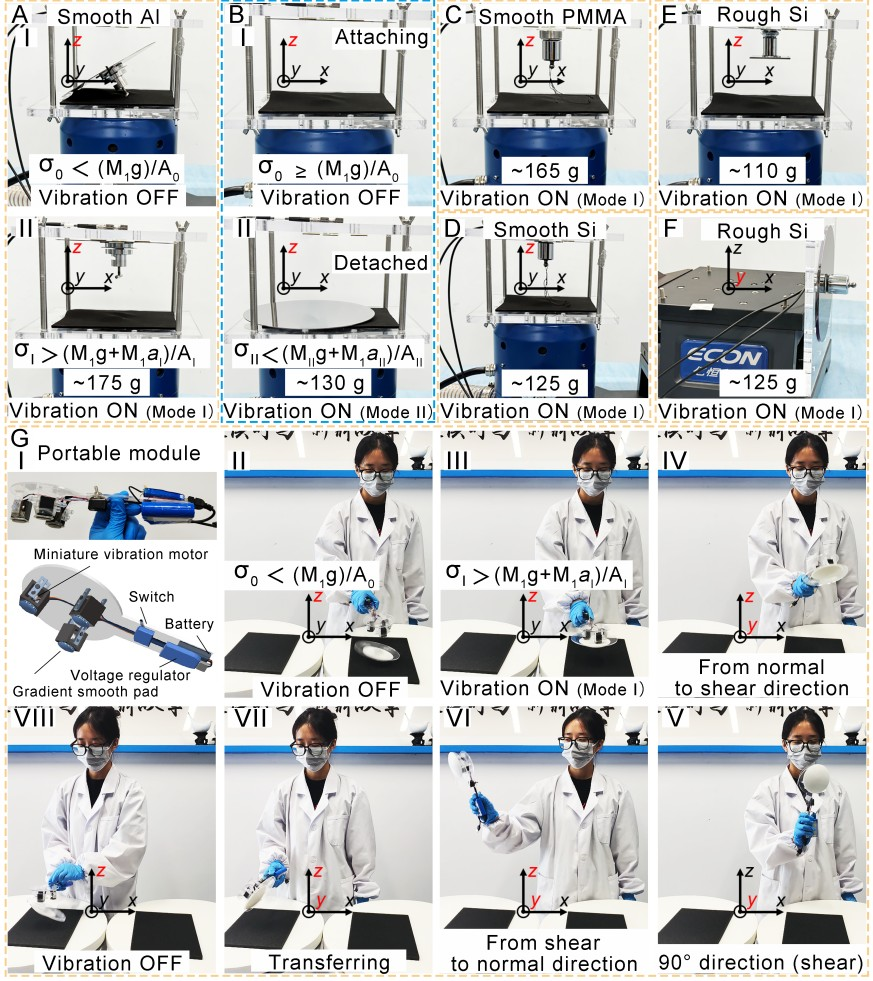
Figure 5 Demonstration of application scenarios for vibration-actuated intelligent-gripping end-effector
The research paper entitled Ultrafast Adhesion/Friction Bidirectionally Switchable Control by Vibration was published in Advanced Functional Materials. Chen Jian, a doctoral student from the College of Mechanical and Electrical Engineering of Nanjing University of Aeronautics and Astronautics, serves as the first-order author, with Ji Keju and Dai Zhendong as co-corresponding authors.
This work was jointly supported by the National Natural Science Foundation of China (Grant Nos. 62233008 and 52075249), the Space Medicine Experiment Project of China Manned Space Engineering (HYZHXM01009) and Tianyuan Laboratory Project (24-JSKY-ZZKT-14).