

In the semiconductor industry, continuous upgrades in dimensional precision and process complexity for chip units, display modules, and heterogeneous integration have created a universal demand for damage-free, precise and efficient handling technology for brittle substrate materials including wafers, glass and ceramics.
Especially for process environments involving high temperatures and vacuum conditions, conventional handling solutions suffer prominent drawbacks: mechanical clamping easily causes surface scratches; chemical adhesives leave adhesive residues; vacuum chucks and electrostatic chucks have limited applicable scenarios under such extreme environments. All these issues undermine the throughput and production yield of front-end semiconductor manufacturing processes.

Figure 1 Schematic diagram of the bionic design and application of Bionic friction pads
The research group led by Ji Keju from Nanjing University of Aeronautics and Astronautics proposed a design and fabrication method for bionic passive friction pads applicable to high-temperature environments. Inspired by the toe pad structures of locusts (Figure 1), the distinctive interfacial mechanical properties of these biological structures featuring low adhesion and high friction offer a novel strategy to address practical engineering demands.
Taking high-temperature-resistant silicone rubber as the base material, the team realized precise modulation of microstructure morphologies via the photolithography thermal reflow process. Combined with multi-physics composite manufacturing technologies including precision electroformed nickel-based molds and vulcanization precision imprinting, Bionic materials with microstructure arrays featuring rounded terminal protrusions were successfully fabricated. The interfacial mechanical performances between the as-prepared materials and brittle substrates represented by silicon wafers were systematically investigated under high-temperature conditions.
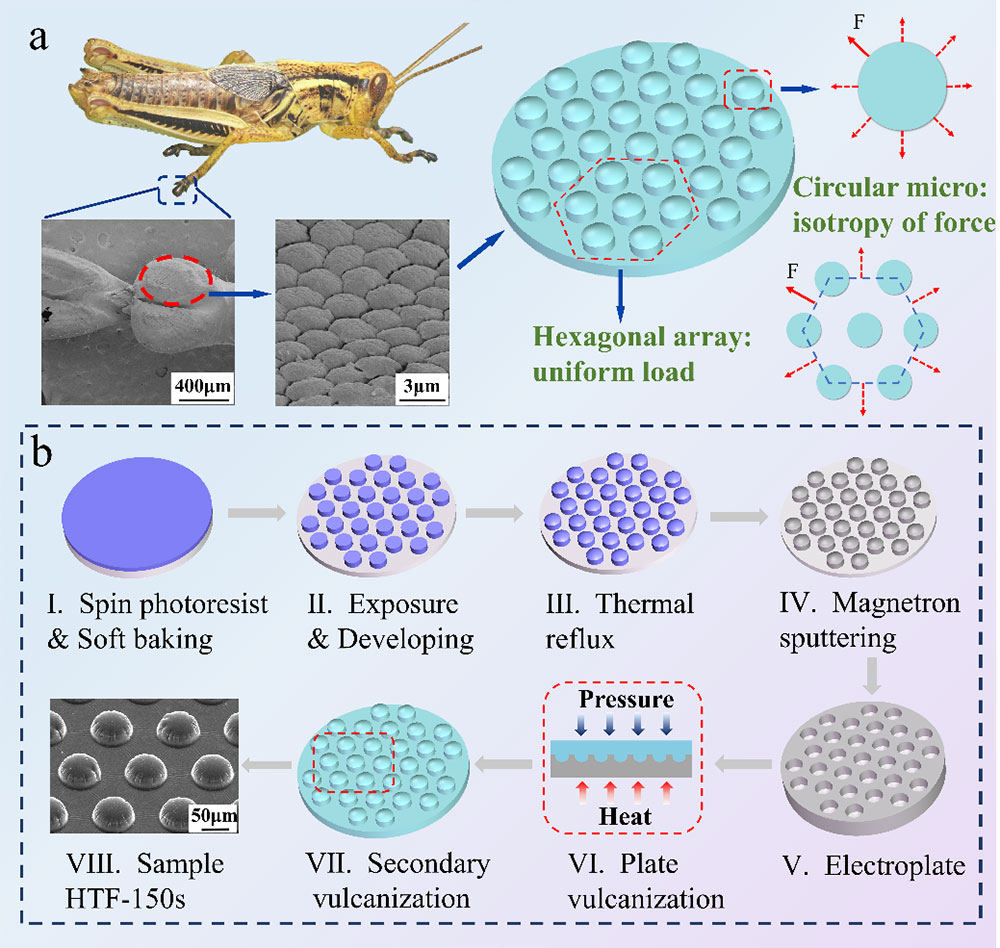
Figure 2 Schematic illustration of the microstructure fabrication process for high-temperature resistant Bionic friction pads
Experimental results reveal that the rounded convex profile at the tip of microstructures on Bionic friction pads exerts a crucial influence on the normal interfacial adhesion force and tangential friction force. The normal adhesion force declines as the curvature radius of the rounded tip protrusions decreases. In addition, the normal adhesion force further drops with the rise of ambient temperature (up to approximately 300 °C), since high temperatures weaken the adhesion governed by van der Waals forces.
The effect of varied curvatures of rounded microstructure tips on tangential friction force follows a complicated rule. On smooth wafer surfaces, the contact area shrinks with the decreasing tip curvature radius. Under the dominant van der Waals interaction, the tangential friction force consequently decreases. By contrast, for rough wafer surfaces, there exists a mechanical interlocking range formed by the mutual fitting between wafer surface roughness and Bionic microstructures. Optimally sized microstructures can enhance friction via the synergistic effect of mechanical interlocking and van der Waals forces. Similarly, tangential friction force decreases as temperature elevates, which is attributed to the attenuation of van der Waals interactions.
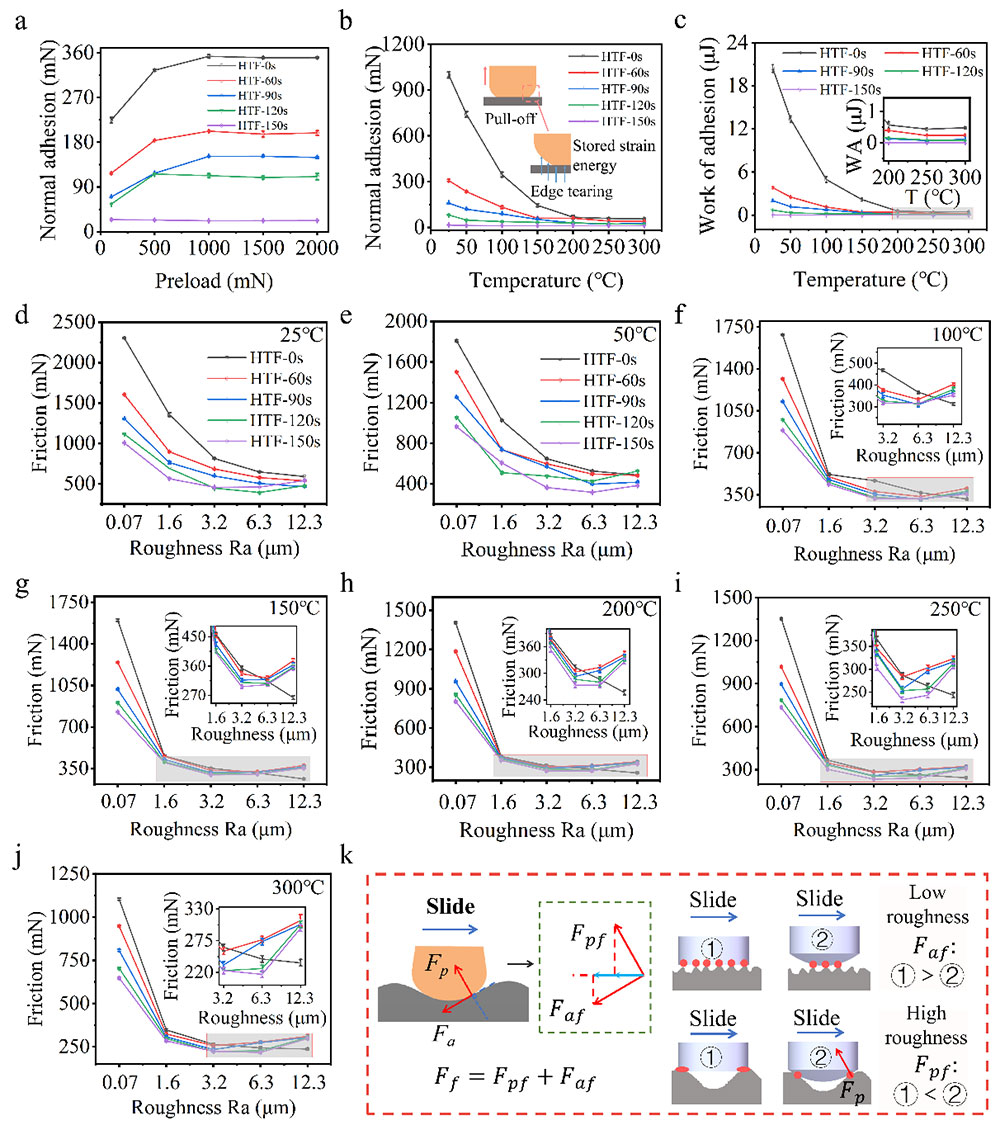
Figure 3 Interfacial Adhesion and Friction Mechanical Properties of Bionic Friction Pads
The team demonstrated the practical application of Bionic anti-slip friction pads mounted on the end effector forks of industrial wafer-handling robotic arms. The distinctive interfacial mechanical properties featuring high tangential friction and low normal adhesion deliver a friction-enhancing yet adhesion-suppressing effect between the fork and wafers during handling. Even at 300 °C, the pads meet the demands for damage-free, precise and high-efficiency positioning and transportation of wafers.
The relevant research findings have been published in Small under the title: Bionic Microstructure with Anti-Slip and Anti-Adhesion for Efficient Handling of Brittle Material Surfaces in High-Temperature Environments (https://doi.org/10.1002/smll.202408236). Zhan Haozhen, a postgraduate student from the School of Mechanical and Electrical Engineering, Nanjing University of Aeronautics and Astronautics, is the first author of this paper, and Associate Researcher Ji Keju serves as the corresponding author.
This work was financially supported by the National Natural Science Foundation of China, Tianyuan Laboratory Fund, and national defense basic pre-research projects. The research also received experimental platform support from Jiangsu Provincial Key Laboratory of Bionic Materials and Equipment as well as Nanjing Adhesion Technology Co., Ltd.
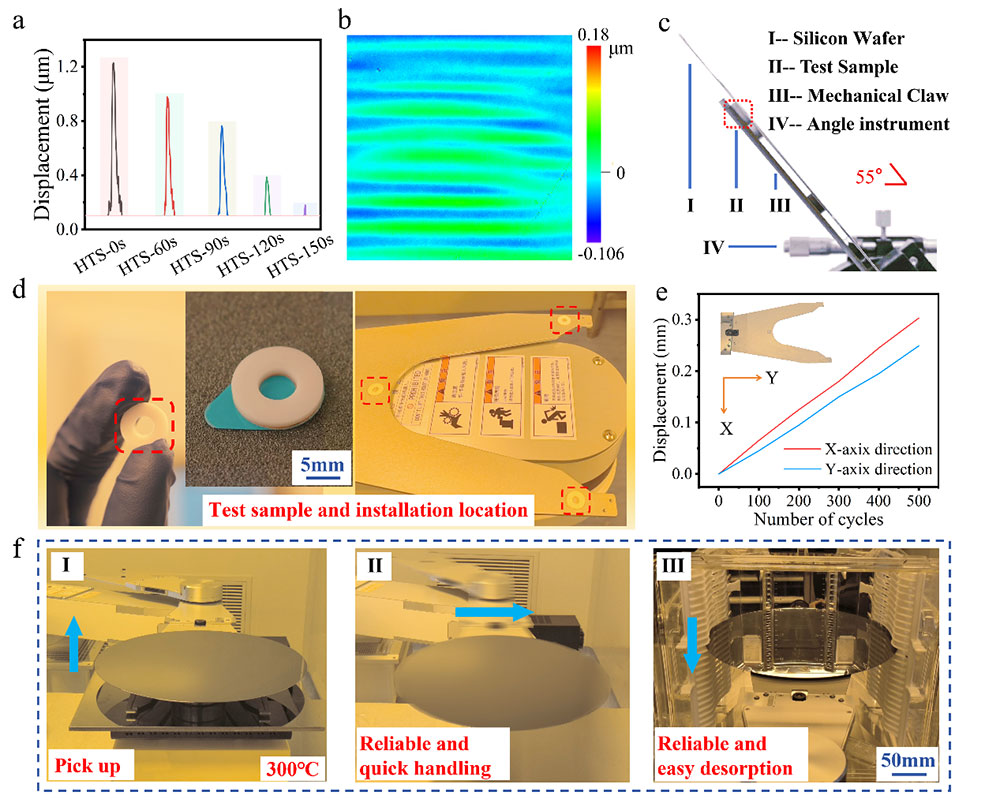
Figure 4 Demonstration of Bionic Friction Pads Applied on Wafer Handling Robotic Forks
This research is one of the team’s research advances in Bionic interfacial mechanical materials. It addresses the demand for damage-free, precise and high-efficiency handling of wafers, glass and ceramics under vacuum and high-temperature environments.
Over the past three years, guided by aerospace and national defense requirements and adopting a bionic research perspective, the team has focused on solid interface manipulation under harsh working conditions within the pan-semiconductor and industrial automation sectors. A full series of innovative Bionic surface and interface products have been developed, including:
· Bionic adhesive pads (Barcode: 6976093990006)
· Bionic friction pads (Barcode: 6976093990013)
· Physical suction cups (Barcode: 6976093990037)
· APR plates (Barcode: 6976093990020)
· Gecko adhesive tapes (Barcode: 6976093990044)
· Microneedle suction cups (Barcode: 6976093990051)
Our research achievements and finished products have been deployed on China’s Mengtian Experimental Module as well as the Shenzhou-15, Shenzhou-16 and Shenzhou-17 manned space missions. Mass supplies are also delivered to leading enterprises across optoelectronics, semiconductor and automation industries, successfully resolving core technical bottlenecks of interface manipulation under vacuum, extreme high and low temperatures, vibration and other harsh environments.