

Strong adhesion coupled with easy detachment constitutes the fundamental mechanical requirement for bionic adhesion technology in engineering applications. In particular, the convenience, cost efficiency and reliability of switching between adhesion and detachment directly determine the realization level of automated interfacial manipulation.
Creatures such as geckos, flies and spiders achieve omnidirectiaonal locomotion on various surfaces by adjusting the angles of their foot bristles. In recent years, scholars worldwide have realized controllable bionic adhesion-detachment via thermal, optical, electrical, magnetic stimuli, as well as gecko-inspired angular regulation. Such approaches have achieved performance comparable to biological adhesion and detachment behaviors, laying a solid foundation for the engineering implementation of bionic adhesion technology.
To further improve the practicality and cost-effectiveness of bionic adhesion technology, the research group led by Ji Keju at Nanjing University of Aeronautics and Astronautics (NUAA) proposed a pressure-triggered controllable adhesion-detachment strategy. Through microstructural design of the bionic adhesive architecture, reversible interfacial adhesion and detachment can be realized merely by applying normal pressure. This design greatly simplifies the approaches to achieve interfacial manipulation.
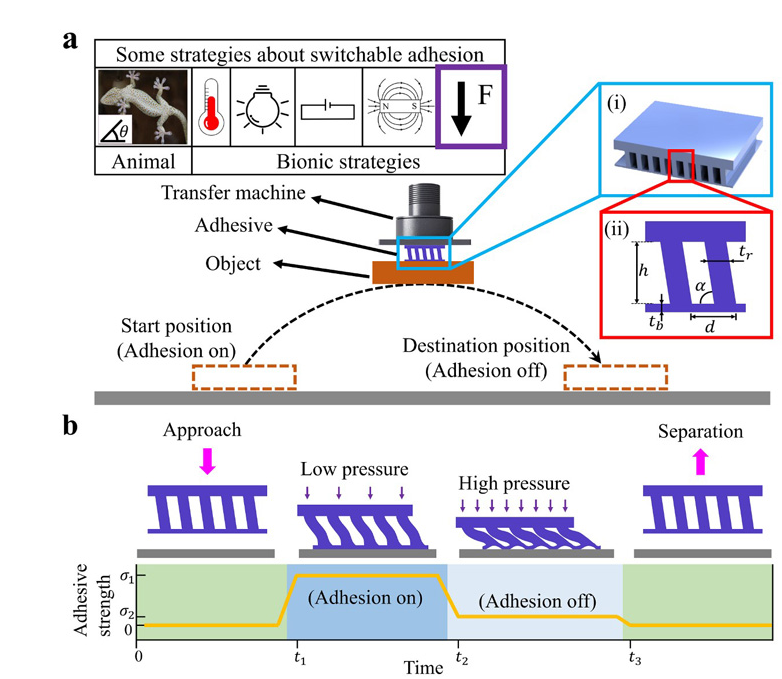
Figure 1 Working Mechanism of the Bionic Adhesive Material
The paper elaborates on a hierarchical bionic adhesive material composed of a backing layer, an intermediate layer and a bottom layer, which features a sandwich interlayer structure with inclined microarray arrangements.
When the bionic adhesive material is subjected to low pressure, the quadrilateral arrays inside the intermediate layer undergo slight deformation. No disturbance occurs between the bottom membrane and the contact surface, maintaining intimate interfacial contact and thereby generating adhesion. Once the applied normal pressure exceeds a specific threshold, the quadrilateral prism arrays of the intermediate layer experience substantial deformation, which triggers buckling of the bottom membrane. The tight contact between the bottom layer and the substrate is consequently disrupted, enabling detachment. By regulating the magnitude of normal pressure, the adhesive material can reversibly switch between the adhesion state under low preloading and the detachment state under high preloading.
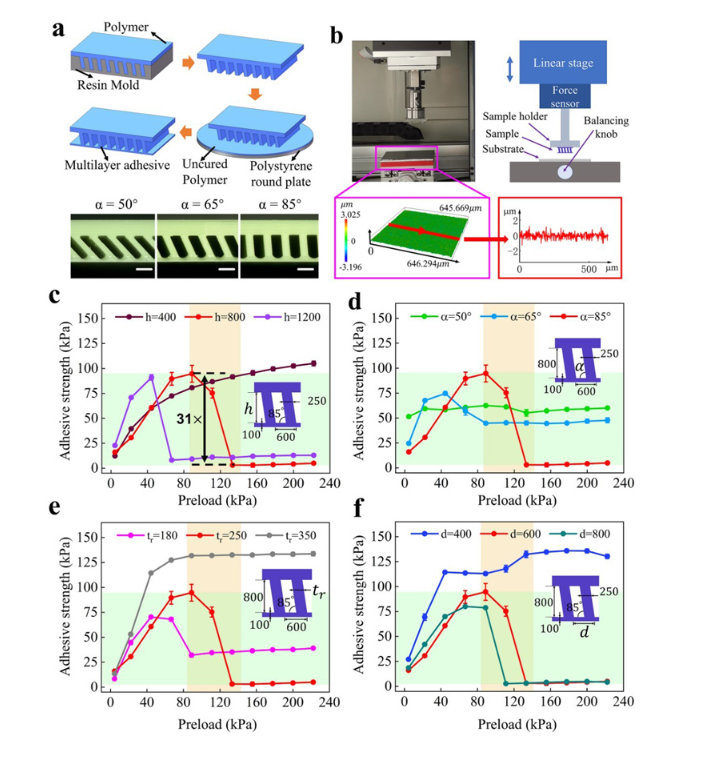
Figure 2 Fabrication and Adhesion Properties of Bionic Adhesive Materials
Structural parameters of the bionic adhesive materials play a decisive role in their pressure-induced adhesion and detachment behaviors. By quantifying parameters such as the inclination angle, spacing and thickness of the inclined arrays, the correlation between pre-pressure and adhesion force can be acquired, which lays a foundation for pressure-regulated adhesion and detachment performance.
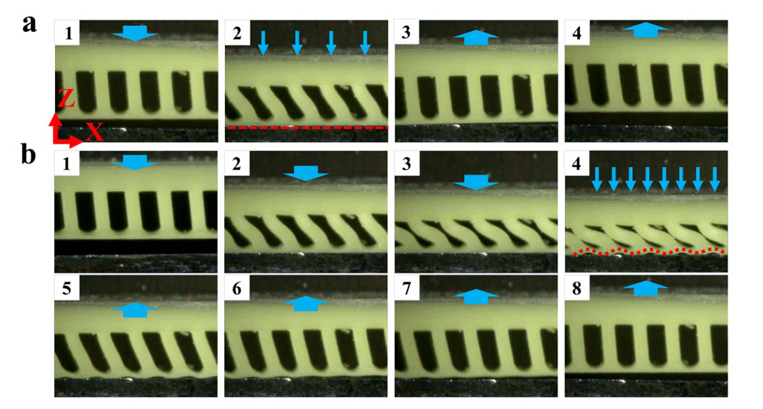
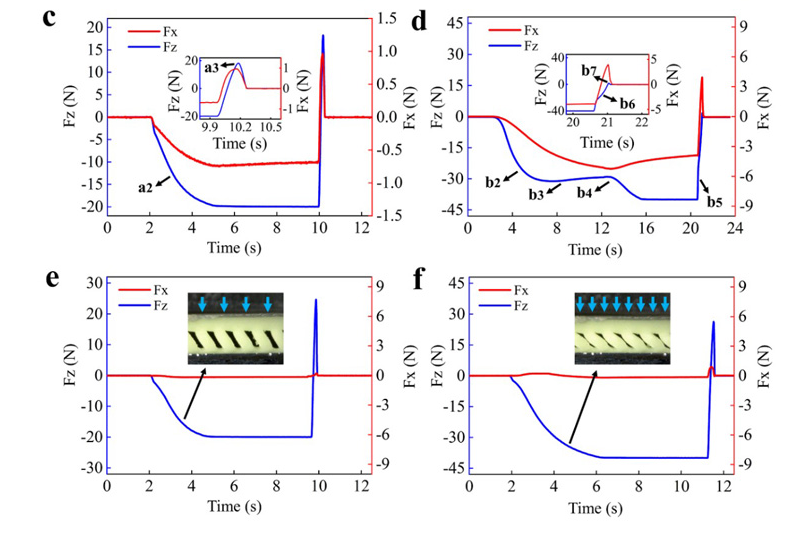
Figure 3 Interfacial Contact and Microstructural Deformation Process of the Bionic Adhesive Material under Low and High Pressure
The deformation process of the bionic adhesive material under low and high pressure demonstrates that the bottom surface of the adhesive material maintains favorable contact with the counterpart surface persistently at low pressure. Under high pressure, drastic deformation takes place in the intermediate layer, triggering buckling of the bottom layer. During force unloading, strain hysteresis of the elastomer hinders the restoration of the original contact state between the bottom surface of the bionic adhesive material and the substrate, thereby achieving interfacial detachment.
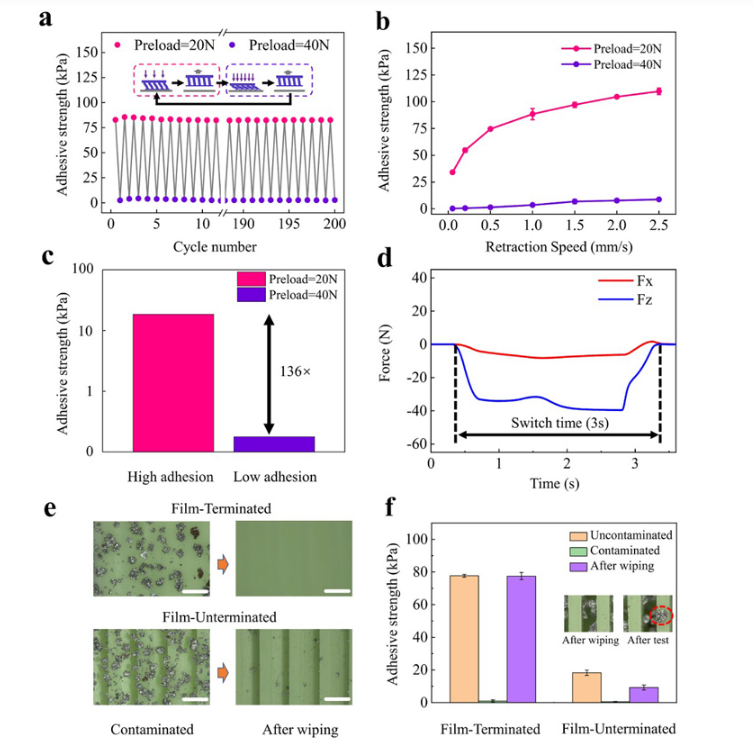
Figure 4 Analysis of Mechanical Influencing Factors and Service Performance of the Bionic Adhesive Material
By optimizing the structural parameters of the bionic adhesive material, a high switching ratio (maximum adhesion force difference up to 136 times) can be achieved under various preloads and pull-off speeds, with an ultra-short switching time (≤ 3 s). Moreover, the planar surface of the bionic adhesive material exhibits excellent comprehensive properties including easy cleaning and outstanding reusability.
The relevant research findings were published in the journal Small under the title Preload-Induced Switchable Adhesion (DOI: 10.1002/smll.202305091). Tu Chongwen, a master’s student from the College of Mechanical and Electrical Engineering, Nanjing University of Aeronautics and Astronautics (NUAA), is the first author; Associate Researcher Ji Keju serves as the corresponding author, and NUAA is designated as the primary affiliation of this work.
This research was financially supported by the National Natural Science Foundation of China (Grant No. 52075249) and the Foundation of Jiangsu Provincial Key Laboratory of Bionic Functional Materials.