
Recently, the astronaut crew of Shenzhou-16 completed the on-orbit verification experiment using domestically developed bionic adhesive shoes with full success. The whole development task was undertaken by the research team led by Professor Dai Zhendong and Associate Researcher Ji Keju from the College of Mechanical and Electrical Engineering, Nanjing University of Aeronautics and Astronautics (NUAA). Nanjing Aide Hengxin Technology Co., Ltd. served as a major participating research institution, contributing distinctive bionic technologies to advance the development of China’s manned spaceflight program.
Figure 1 Astronauts Wearing Bionic Adhesive Shoes Inside Tianhe Core Module
01 Exploring the Universe, Putting Humans at the Center
Space life science is a vital discipline that emerged and evolved alongside human spaceflight endeavors. It bears profound scientific significance and practical application value for deepening the understanding of space life phenomena, improving the human knowledge system, and enabling humans to survive and operate in space for extended durations.
Prolonged spaceflight tends to trigger a series of physiological disorders in astronauts, including weightlessness-induced bone loss, muscular atrophy, and cardiovascular dysfunction. To preserve astronauts’ physical health in orbit, various exercise facilities have been deployed onboard the space station, such as flywheel exercisers, resistance training devices and treadmills. Nevertheless, such equipment suffers from large volume, heavy weight, and is incapable of delivering flexor muscle stimulation.
Creatures with climbing capabilities in nature have offered feasible solutions to the aforementioned challenges. In 2017, Professors Dai Zhendong and Ji Keju from the College of Mechanical and Electrical Engineering, Nanjing University of Aeronautics and Astronautics, collaborated with the research team of the China Astronaut Research and Training Center. Inspired by the adhesive organs of geckos and the attachment structure-function characteristics of hillstream loaches, the joint team conquered multiple core technical bottlenecks concerning the surface adaptability, weather resistance and durability of bionic adhesive materials.
After five years of research, numerous rounds of scheme demonstration and seven generations of prototype iteration, the team successfully developed bionic adhesive shoes featuring low preload, high friction and controllable adhesion-detachment. This disruptive bionic technology delivers a brand-new solution for weightlessness protection of astronauts on board the space station.
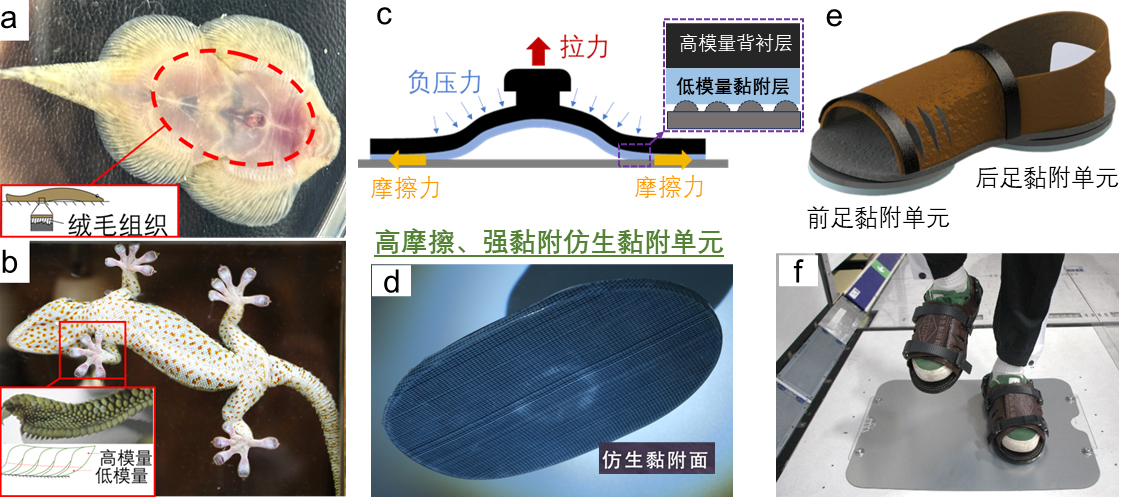
Figure 2 Design of Bionic Adhesive Shoes with Variable Modulus and Hierarchical Structural Characteristics
02 Uniting Efforts for Collaborative Research Breakthroughs
As the saying goes, many hands make light work. Innovations in bionic science cannot be achieved without interdisciplinary collaboration.
Since 2017, with strong support from the China Manned Space Engineering Office, multiple parties have jointly established the project team for dry adhesion force stimulation on China Space Station. The participating members include the research groups led by Dai Zhendong and Ji Keju from Nanjing University of Aeronautics and Astronautics, the teams headed by Li Yinghui and Li Zhili at the China Astronaut Research and Training Center, Yuan Peng’s research group from Jiangsu Provincial Institute of Sports Science, together with Nanjing Aide Hengxin Technology Co., Ltd. The consortium has carried out joint technical tackling, industry-university-research integration and collaborative innovation across all teams.
Over five years of research, the project team independently developed a host of key technologies, conquered numerous technical challenges, and continuously refined the details of bionic products. Eventually, the bionic adhesive shoes tailored for space station application were successfully developed. Furthermore, the team formulated specialized bionic exercise protocols, investigated how adhesive force affects biomechanical indicators during microgravity physical training, and thereby established an innovative bionic mode for mechanical stimulation targeting astronauts’ lower-limb musculoskeletal system.

Figure 3 Ground-Based Microgravity Simulation Verification Test of Bionic Adhesion Exercise System
03 Gecko-Style Walking Finally Reaches Space
On November 12, 2022, the bionic adhesive shoes were transported to China Space Station onboard the Tianzhou-5 cargo spacecraft, marking the world’s first pair of bionic adhesive shoes to be sent into space. From January 17 to 25, 2023, the Shenzhou-15 astronaut crew completed the first in-orbit physical training session by wearing the bionic adhesive shoes in accordance with the formulated exercise regimen. On August 15, 2023, the Shenzhou-16 crew carried out the optimized exercise protocol for the bionic adhesive shoes.
The bionic adhesive shoes enable effective training of lower-limb skeletal muscles during stepping motions via plantar adhesive force. The low-modulus adhesive layer mimicking the tips of gecko toes delivers superior adaptability to surfaces with varying roughness, while the attachment structure inspired by hillstream loaches further boosts adhesive force and structural stability. Electromyography (EMG) analysis verifies that the adjustable adhesive force generated by the shoes can effectively exercise the lower-limb musculoskeletal system, particularly flexor muscles. It alleviates adverse effects including muscular atrophy and bone mineral loss, which commonly occur in lower limbs exposed to prolonged weightlessness. The entire on-orbit verification experiment was accomplished with complete success.
Bionics serves as an inexhaustible source for innovative advancement of spaceflight undertakings. Studying the stress responses, adaptation and physiological variations of terrestrial organisms at all hierarchical levels under extreme space environments constitutes a vital approach to uncover the essence of life phenomena. By adopting bionic research methodologies, researchers can explore fundamental scientific laws behind biological survival wisdom, and develop astronaut health protection strategies based on novel bionic technologies, concepts and approaches. The whole industrial chain ranging from basic scientific research and technological breakthroughs to end-product application has been fully established, fostering a series of specialized bionic equipment to fuel the sustained leap-forward development of China’s space industry.
The Dry Adhesion Force Stimulation Project for Space Station has received continuous professional guidance from the China Manned Space Engineering Office, the China Astronaut Research and Training Center and numerous experts and scholars. It also gained strong support from the People’s Government of Lishui District, Nanjing and Nanjing Lishui High-tech Investment Co., Ltd. Sincere gratitude is extended to the astronaut crews and all staff of the manned spaceflight system who provided experimental support for this program.