

Bioelectrical signals are one of the most fundamental physiological signals of the human body. Monitoring bioelectrical signals enables the diagnosis and prevention of various physiological diseases. With the continuous advancement of microelectronics technology, an increasing number of medical devices adopt the integration of electrode patches and diagnostic equipment to build healthcare systems capable of real-time human physiological monitoring. Such monitoring systems exert remarkable preventive effects against cardiovascular and cerebrovascular diseases characterized by sudden onset and high lethality.
As a core hardware component of the entire sensing system, bioelectrical monitoring electrodes are in direct contact with human skin to collect bioelectrical signals, serving as the foundational unit of bioelectrical sensing systems. Silver/silver chloride (Ag/AgCl) gel electrodes are the most widely adopted conventional type. Nevertheless, the gel matrix and adhesive substances tend to cause skin irritation, making them unsuitable for long-term bioelectrical signal recording. To achieve prolonged skin-attached monitoring, biocompatible dry electrode technologies have undergone considerable development in recent years. However, constrained by intrinsic skin properties including elasticity, surface roughness, as well as accumulated sweat, sebum, dandruff and body hair, dry electrodes still face severe challenges in optimizing skin adhesion, interfacial contact impedance, air permeability and other key performances.
Natural surfaces for biological attachment feature complex and diversified topological characteristics; therefore, a single adhesion mechanism cannot deliver stable attachment and rapid locomotion for organisms. Virtually all creatures with omnidirectional locomotion capability possess two or more interfacial adhesion strategies. Larger organisms especially rely on the synergistic effect of multiple adhesion modes to enhance interfacial adhesion force and counteract their own body weight. The robust adhesion regulation capacity of biological systems originates from the sophisticated cross-scale attachment microstructures on animal foot pads, as well as the synergistic coupling among diverse adhesion mechanisms embedded within these hierarchical architectures.
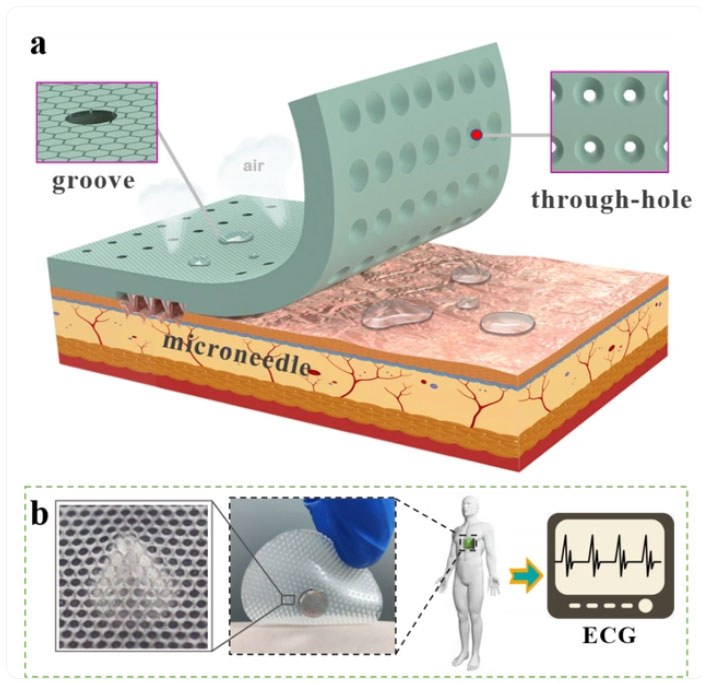
Figure 1 Design of Bionic Electrodes with Sweat Perspiration, Breathability and Skin Adhesion Properties
This study proposes a health monitoring electrode patch that integrates sweat drainage, air permeability and multi-mechanism adhesion performance. The integrated structure consisting of tapered through-holes and honeycomb microgrooves is adopted to realize sweat excretion and air permeability of the patch. The Laplace liquid pressure difference generated by tapered through-holes works synergistically with the capillary force of microgrooves to achieve self-driven sweat transportation.
Multi-mechanism adhesion formed by Ag/Ni microneedle arrays and PDMS-based adhesive materials ensures mechanical stability at the interface between the electrode patch and human skin. By precisely tuning the height of Ag/Ni microneedle arrays, the microneedles can gently contact the stratum corneum of skin. On the premise of guaranteed biosafety, stable channels for bioelectrical signal acquisition are constructed.
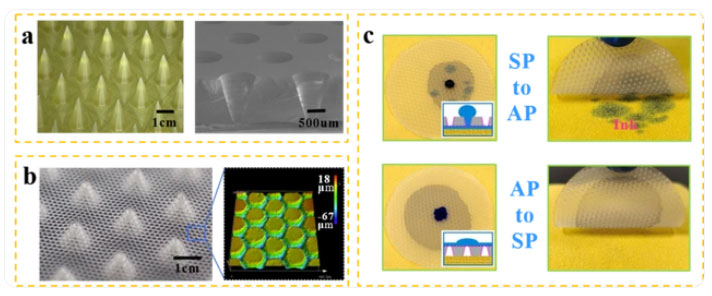
Figure 2 Structural Morphology of Sweat-Wicking & Breathable Channels of Bionic Monitoring Electrodes and Schematic Diagram of Unidirectional Self-Driven Sweat Transport
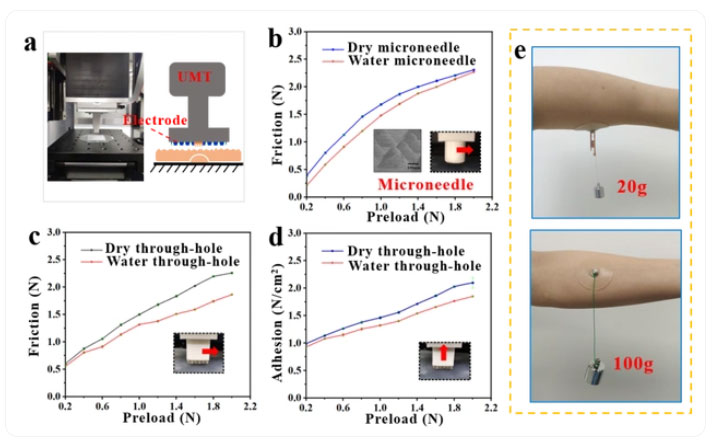
Figure 3 Quantitative Measurement Experiments of Tangential Friction Force and Normal Adhesion Force for Bionic Electrode Patches
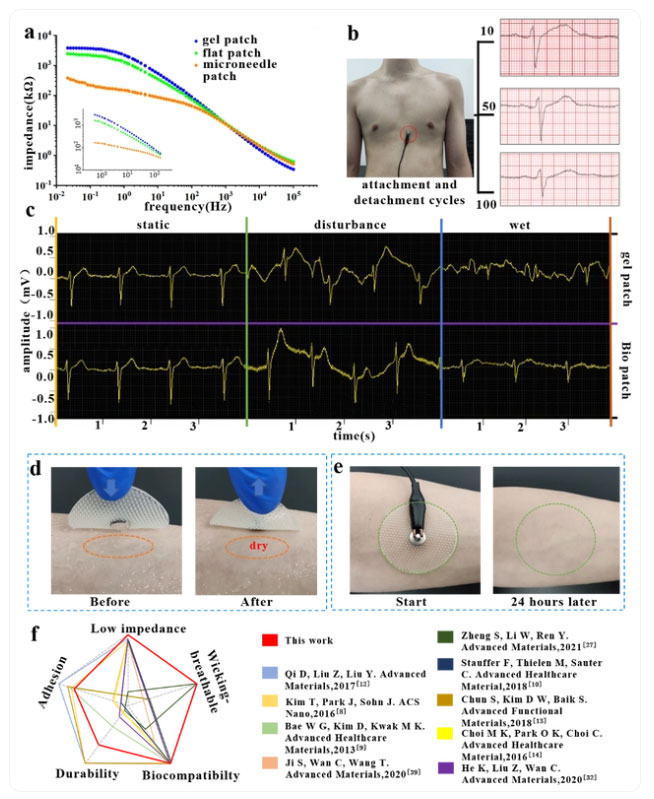
Figure 4 ECG Monitoring Performance of Bionic Electrode Patches and Biocompatibility Evaluation of Skin Contact
Skin-electrode interfacial impedance tests reveal that the contact impedance of the bionic electrode is lower than that of conventional standard Ag/AgCl gel electrodes at frequencies below 100 Hz. When applied to record EMG and ECG bioelectrical signals from human volunteers, the bionic electrode delivers favorable signal acquisition performance under both static and dynamic conditions. This excellent performance is mainly attributed to the mechanical interlocking formed between the microneedle arrays and the high-impedance stratum corneum of skin, which synergizes with the adhesive contact of flexible polymers with through-hole arrays. Such combined effects strengthen the interfacial adhesion between the bionic electrode and skin surface and effectively suppress motion artifacts.
Meanwhile, the self-driven sweat drainage structure integrated into the electrode satisfies skin perspiration and breathability requirements, endowing the device with outstanding skin biocompatibility. This work proposes a novel strategy for long-term wearable health monitoring.
Building on our previous research on bionic electrodes combining microneedle friction and tree frog-inspired wet adhesion (Advanced Materials Interfaces, 2022, 2200532, back cover paper), the present study focuses on the fabrication approaches to realize spontaneous sweat drainage and air permeability for bionic electrodes. The corresponding research paper entitled Biomimetic Patch with Wicking-Breathable and Multi-mechanism Adhesion for Bioelectrical Signal Monitoring has been published in ACS Applied Materials & Interfaces. Qian Zhang, a postgraduate student from the College of Mechanical and Electrical Engineering, Nanjing University of Aeronautics and Astronautics (NUAA), serves as the first author; Associate Researcher Ke Ju is the corresponding author, and NUAA is the primary affiliation institution. This research was financially supported by the National Natural Science Foundation of China, Nanjing Medical Science and Technology Development Fund, Jiangsu Provincial Key Laboratory of Bionic Functional Materials Fund, and other research grants.
DOI: https://pubs.acs.org/doi/full/10.1021/acsami.2c13984