

Locomotion is an essential attribute of animals. To move, animals must first perceive their surroundings, encompassing both the external environment and internal bodily conditions. Perceptual signals are transmitted to the brain for multi-information fusion and decision-making. Upon decision completion, motor commands are generated to trigger muscle contraction. Driven by these commands, limbs interact with external surfaces, through which animals acquire reaction forces required for locomotion from the environment.
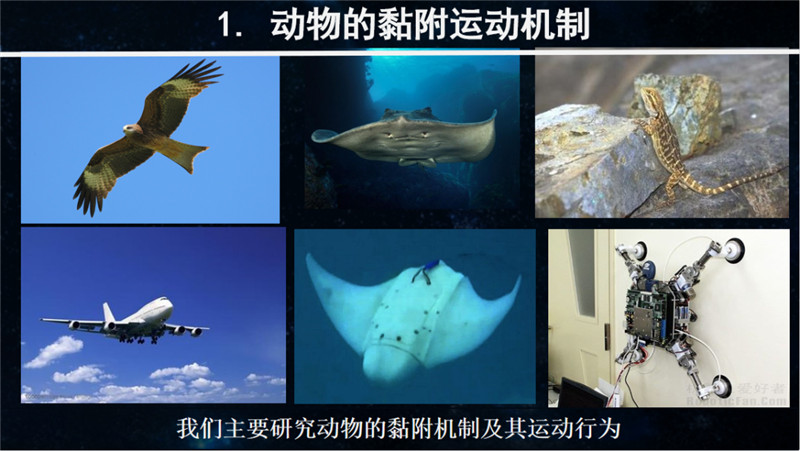
Numerous successful biomimetic applications have been realized so far, among which the aircraft stands as the most representative achievement. Modern aircraft can fly higher, farther and faster than any bird in nature. Nevertheless, no aircraft is capable of flying with the superior safety and agility inherent to birds. Hence, there remains ample room for us to draw inspiration and learn from avian flight mechanisms.
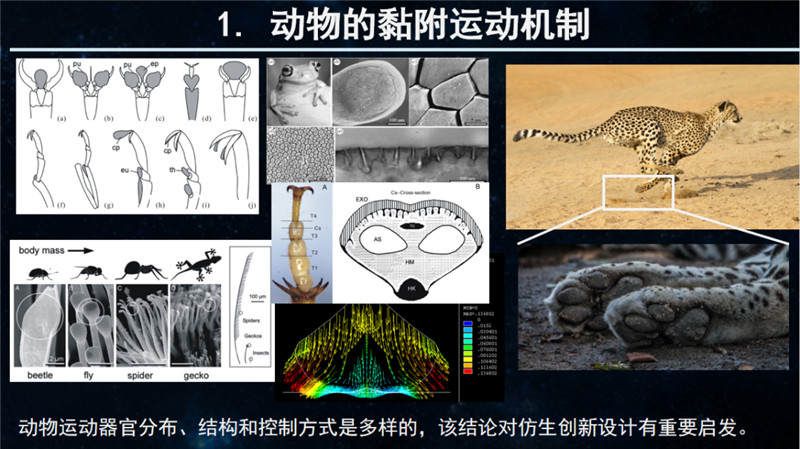
Our core research focuses on animal adhesion and locomotion. Animals survive in a law-of-the-jungle natural ecosystem. To evade predation by birds, numerous insects take shelter beneath leaves, which compels them to evolve adhesive capabilities. The dark-colored regions on their bodies serve as adhesive units; these units differ drastically in distribution and dimension across species, yet all fulfill the adhesion function effectively.
The structural diversity of biological adhesive structures inspires us that identical functional demands can be realized via varied structural designs.
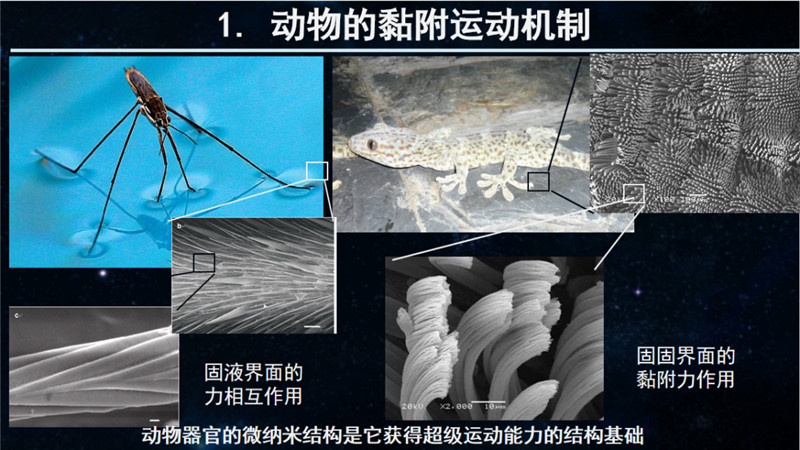
Our research mainly centers on geckos. Biological evolution conveys a fundamental principle: performance is determined by structure.
The creature shown in the upper left corner is a water strider. This tiny insect has inspired scientists to publish four research papers in Nature and Science. Further studies revealed that its extraordinary capability essentially stems from the regulated interfacial interaction between solid and liquid phases. The water strider achieves such precise regulation owing to ultra-fine hairs covering its legs, which are further decorated with smaller nanostructures.
The upper right displays the adhesive structure of a gecko’s foot, which relies on solid-solid interfacial interactions. Ordinarily, contact between two solid bodies generates repulsive forces when one presses against the other. However, geckos reveal a totally distinct physical mechanism: attractive intermolecular forces can exist between two solid surfaces, which accounts for their marvelous climbing ability. The core nanostructures enabling this unique function are the keratinous setae on gecko toe pads.
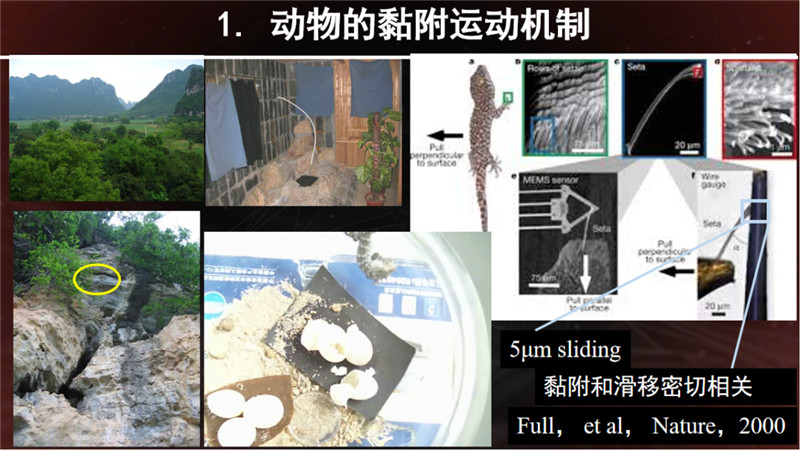
Geckos inhabit the karst hillocks. The small crevices marked by the yellow circles are favored habitats for geckos. These steep recesses are inaccessible to snakes and provide safe shelter. This gecko has just hatched from one egg. To this day, it remains an unresolved puzzle: how such a fully formed gecko can curl up inside such a tiny egg. This mystery awaits further exploration in the future.
What exactly is the relationship between structure and function? Initially, researchers failed to fabricate artificial hairs comparable to gecko setae. The figure on the left illustrates experiments in which intact gecko setae were damaged to varying degrees to investigate corresponding changes in adhesion force. The experiment proves that structure is critical. Severe structural damage leads to nearly complete loss of adhesion.
We further explored how these biological structures form. Gecko setae are epidermal derivatives, different from human hair. Human hair grows from hair follicles, whereas gecko setae develop directly from the epidermis.
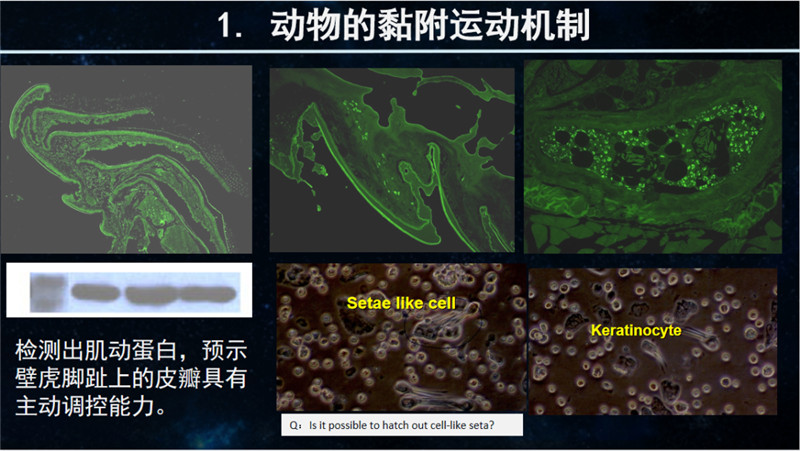
Do gecko setae possess sensing capability and actuating functions? How can we investigate this? We examined whether actin exists within the seta-bearing flaps of gecko toes, given that actin enables muscle movement. The regions highlighted in yellow indicate the presence of actin, demonstrating that the flaps with setae can perform active motion.
These setae feature nanoscale features and measure over 100 micrometers in length, posing tremendous fabrication challenges. We once attempted to cultivate such structures biologically, and we achieved limited success, yet the results were inferior to natural gecko setae. Consequently, we had to develop diverse manufacturing techniques to artificially replicate these structures.
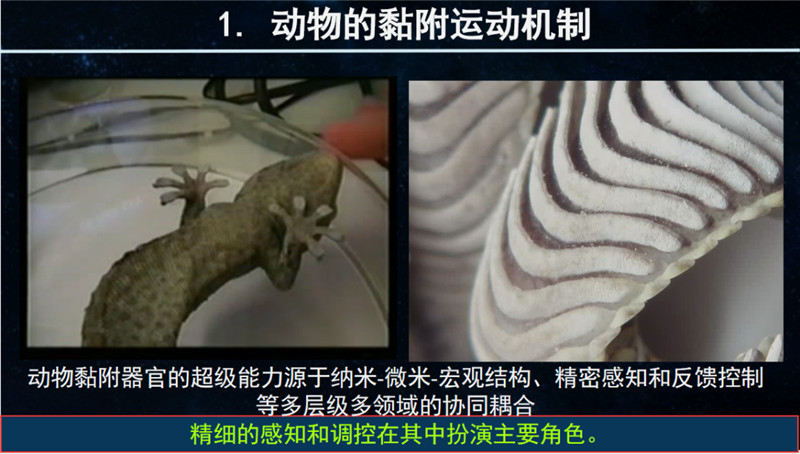
The left image captures a gecko adhering to the ceiling. Its toes exhibit extraordinary capabilities: they turn backward, achieve attachment and then slide tangentially. This locomotion pattern is closely linked to its adhesive performance. The right image presents the corresponding microstructures.
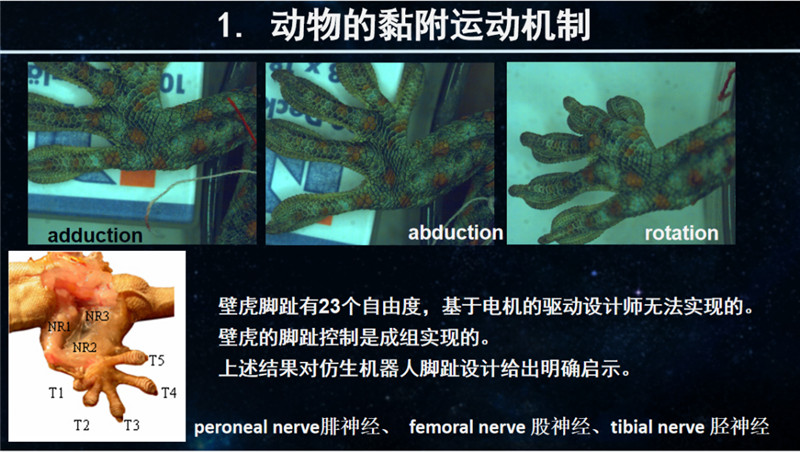
Can these three locomotion modes — attachment, spreading and twisting — be actively regulated? Our research reveals that geckos possess three peripheral nerve bundles, whose denominations are marked below. Each nerve bundle performs distinct and well-defined functions, further validating the principle that structure determines function.
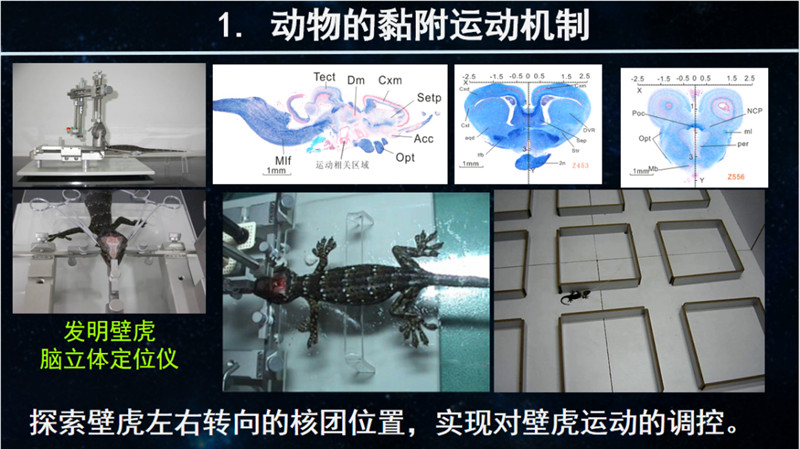
Initially, I discussed with Professor Sun Jiurong from Peking University whether we could regulate gecko locomotion by controlling peripheral nerves. We later found this approach infeasible, as the periphery contains abundant nociceptors. Surgical intervention would inflict severe pain on geckos, making them unresponsive to control signals.
We then realized the brain lacks nociceptors. Accordingly, we shifted our research focus to the gecko brain, investigating which nuclei govern left turning, right turning and forward movement. Fortunately, after years of efforts, we successfully identified the nuclei responsible for left turns and right turns, enabling motion control via implanted microelectrodes.
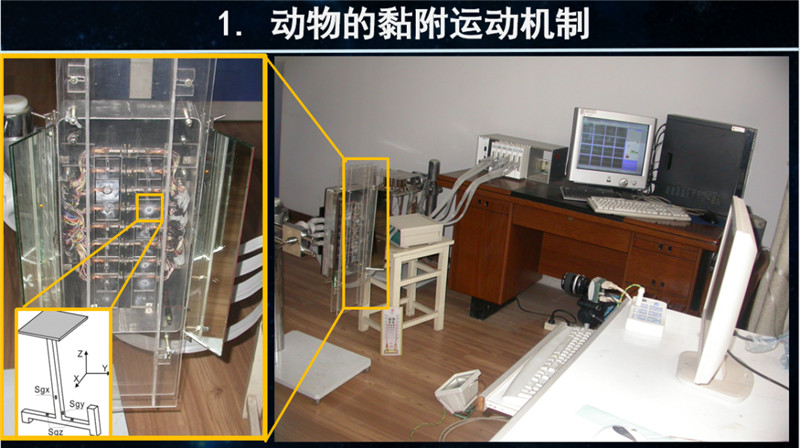
Treating the gecko itself as a locomotor, namely a cyborg animal, is a hot and promising research direction nowadays. Nevertheless, in most cases, we aim to develop bio-inspired robots. To build such robots, the first step is to figure out how geckos move and what mechanical laws govern their locomotion.
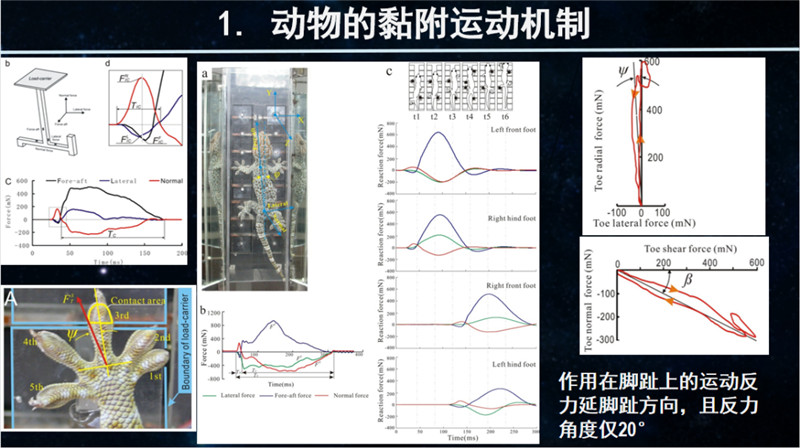
We established a locomotion force measurement system. At that time, American-made sensors cost 10,000 US dollars apiece, which was unaffordable. Therefore, we independently developed our own sensors and assembled an array consisting of dozens of sensor units. Fortunately, when geckos traversed the platform, we could capture the force generated by each footstep under favorable conditions. The acquired data indicated that geckos adopt a diagonal gait during locomotion: the left forelimb moves in coordination with the right hindlimb, and the right forelimb with the left hindlimb.
One day, a student came to me and reported that the gecko’s toe had stepped onto an unintended sensor. Normally, such data would be discarded. However, I recognized great research value in this accident. We successfully measured the contact force generated by partial contact of a single toe. After transforming the force data into the body coordinate system, intriguing results emerged. As shown in the upper-right figure, the force vector consistently aligns with the orientation of the gecko toe. Furthermore, the force angle shown in the lower-right figure remains steady at only 20°, a highly stable value. Overseas studies have concluded that detachment occurs at 30°, while gecko toes operate at 20°.
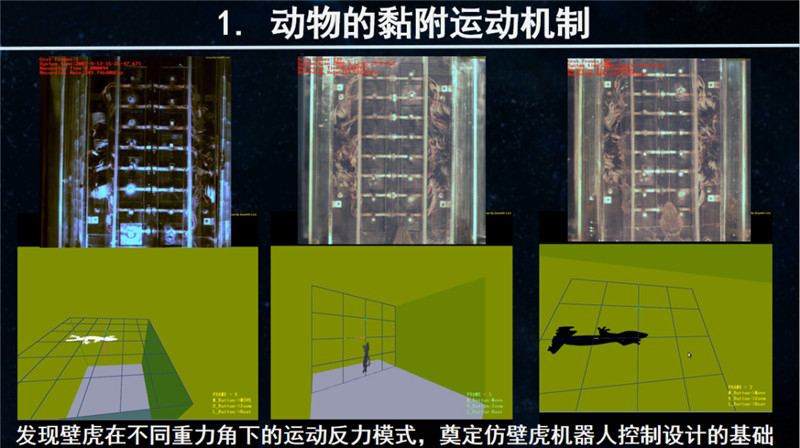
We adopted this system to measure the locomotion reaction forces of geckos moving on ceilings, vertical walls and horizontal ground. The left graph corresponds to ceiling locomotion; the middle one illustrates wall climbing. During wall climbing, the forelimbs and hindlimbs each bear half of the gecko’s body weight, and the contact force angle is merely 15°. This explains why geckos favor vertical walls: they can hang stably with just a single toe without falling off.
Here is an interesting observation: geckos engage in mating on vertical surfaces, and their eggs are directly adhered to walls after oviposition.
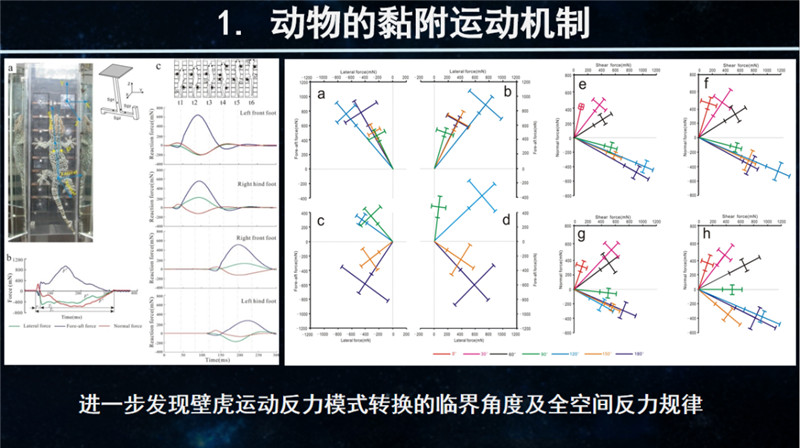
We measured the variation of gecko locomotion reaction forces as the inclined surface angle increased from 0°, 30°, 60° up to 180°. Two critical angles were identified. Between 0° and 90°, the transition of locomotion mode occurs at a critical angle of 80°, while the critical angle is 140° for surfaces ranging from 90° to 180°. These critical angles are also very similar to those observed in tree frogs and locusts.
I once talked with several rock climbers. They mentioned that they need to stretch their arms wide when climbing steep slopes, which is exactly the same behavioral strategy adopted by animals. Nevertheless, the underlying neural mechanisms and mechanical principles behind this phenomenon remain unclear to date.
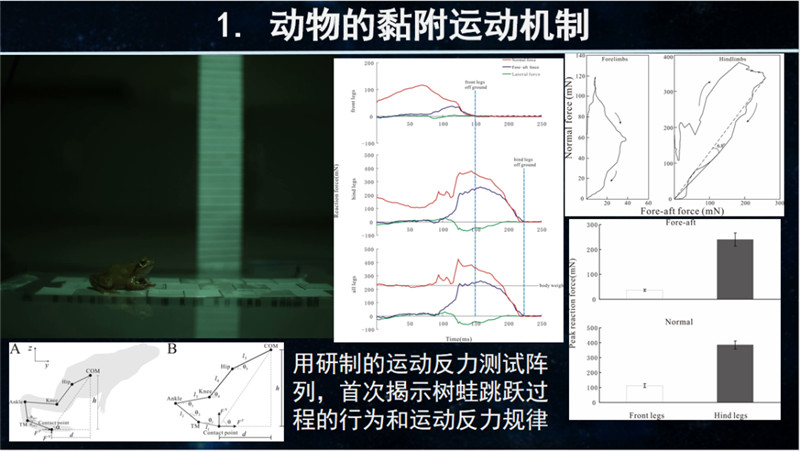
In previous studies on jumping locomotion, researchers failed to clarify the distinct functions of forelimbs and hindlimbs. Our measurements unveiled how these limbs coordinate during leaping. The forelimbs exert force first. Force curves indicate that after the forelimbs lift off the surface, the hindlimbs deliver propulsion. At this stage, the hindlimb force angle ranges from 55° to 57°, and the center of gravity falls forward. When the hindlimbs detach from the substrate, the force angle is approximately 45°.
For a long time, I found this phenomenon astonishing. Such a relatively primitive animal instinctively employs a 45° take-off angle, the theoretical angle for maximum jumping range.
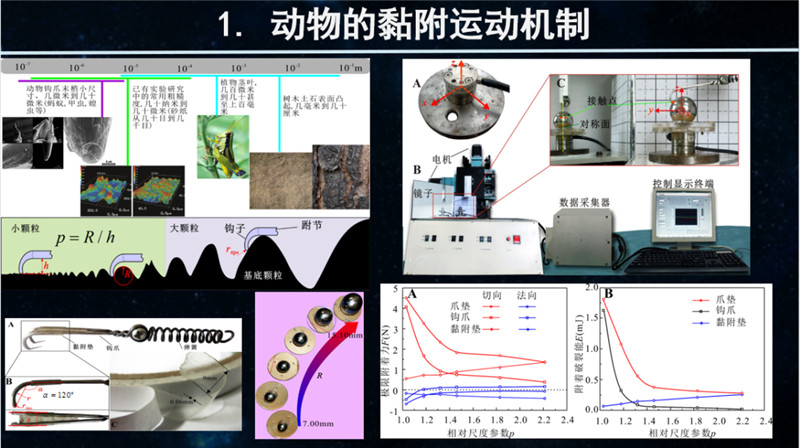
Why do numerous animals possess both adhesive pads and claws? How do they function individually and cooperate synergistically? Claws perform well on rough surfaces, whereas adhesive pads achieve large contact areas only on smooth substrates. However, natural surfaces are rarely perfectly smooth or purely rough. How do animals tackle such complex surface conditions?
We explored the synergistic mechanism between claws and adhesive pads. The upper figure illustrates the research background and experimental setup. As shown in the results below: claws alone yield small contact areas and weak adhesion. When claws and adhesive pads work together, the overall force generated exceeds the sum of forces produced by each structure independently. It demonstrates how ingeniously these biological systems are designed. Nevertheless, such sophistication comes through natural selection over hundreds of millions of years, whereby unfavorable structural designs were eliminated.
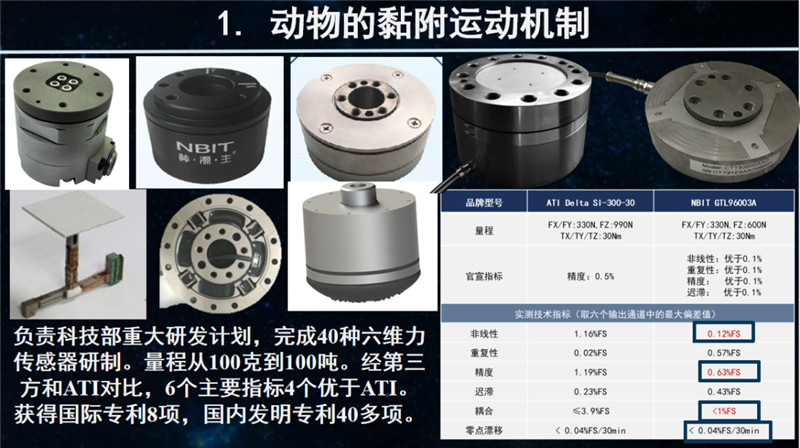
As mentioned earlier, we developed 3D force sensors to meet research demands. Subsequently, this design technology was extended to six-axis force sensors. The major R&D project funded by the Ministry of Science and Technology, which we led, has been completed. Supported by this project, we developed sensors covering a measurement range from 100 grams to 100 tons. The medium-range sensors have been widely adopted by China Automotive Engineering Research Institute.
I am pleased to share another exciting update: our sensors have been exported to the United States. After three months of testing conducted by an American enterprise, the results showed that our sensors outperformed the industry-leading ATI sensors in four out of six key performance indicators.
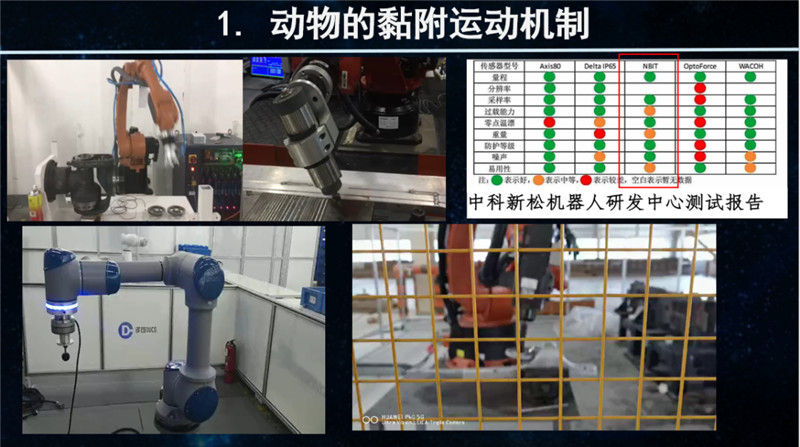
Where can force sensors be applied? Typical scenarios include automated assembly, deburring, polishing and grinding. These tasks used to rely on manual labor, which is dirty and strenuous, and few people are willing to take such jobs nowadays. By equipping robots with force sensing capability, we enable robots to replace humans to accomplish these operations.
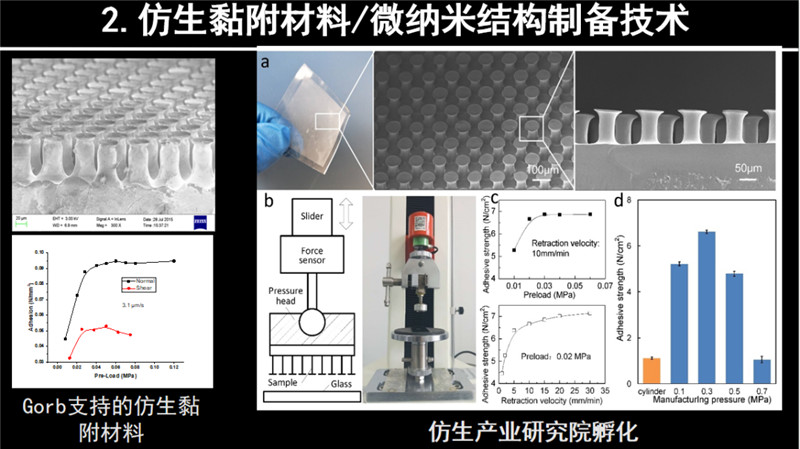
As mentioned earlier, fabricating artificial adhesive setae was once a huge challenge for us. Nevertheless, by carrying out structural damage experiments, we clarified their functions and the structure-function relationship. Eventually, we succeeded in manufacturing these adhesive microsetae.
The sample on the far left is the German product, the only one available for mass production so far. The samples on the right are our products developed after more than ten years of research and development, which we are now capable of manufacturing.
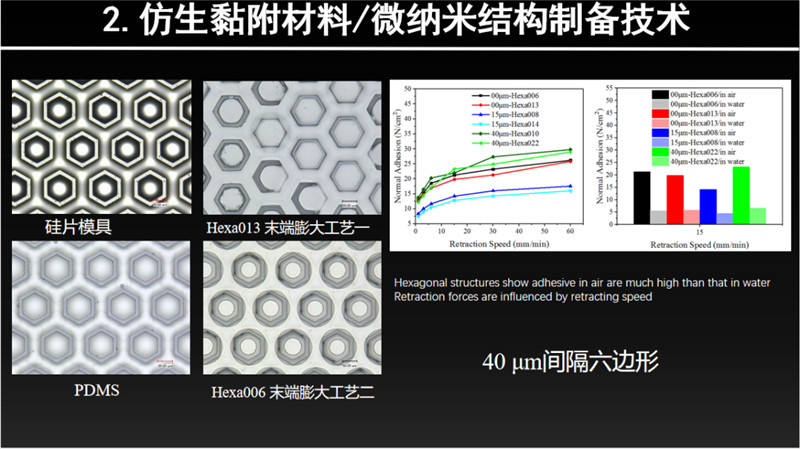
Meanwhile, we have fabricated a wide variety of structural geometries. Reliable adhesion and high friction can be achieved for both solid contact and contact on water surfaces. Furthermore, we possess growth technology capable of synthesizing adhesive materials with feature sizes ranging from 10 to 20 nanometers.
We can fabricate adhesive devices utilizing such adhesive structures and materials. The setup shown here simulates microgravity conditions in space with floating objects. Normally, objects would bounce apart upon collision. However, with our material, collision facilitates bonding between two objects. If space debris drifts over, it can be captured. Beyond debris, the device is also capable of grasping other targets.
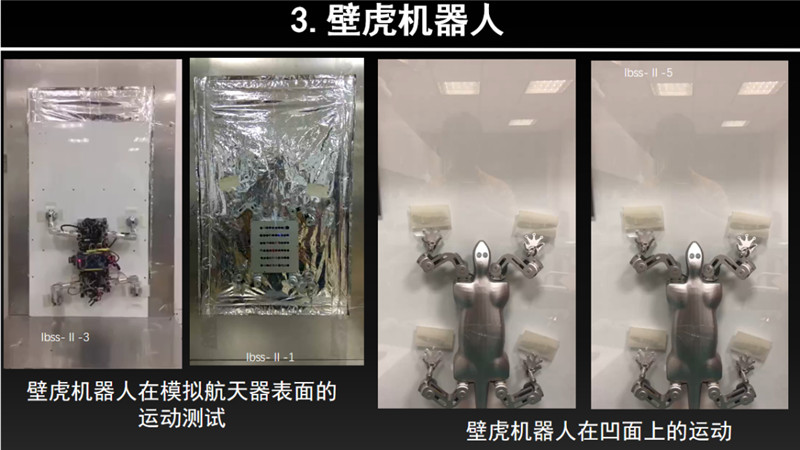
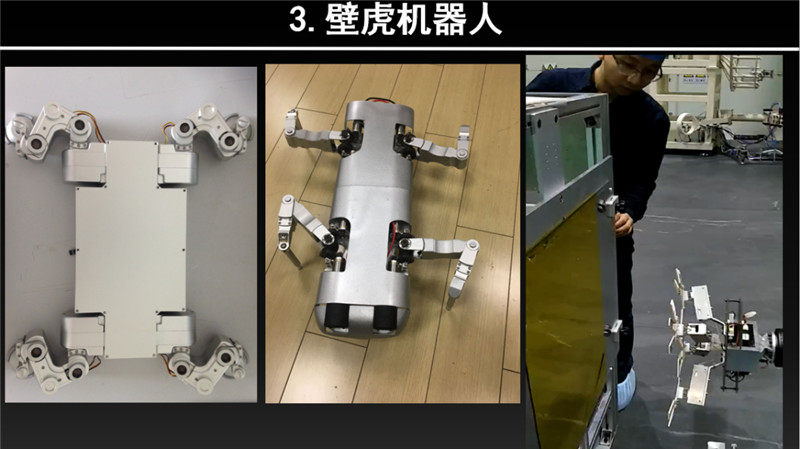
By integrating this technology with robotic systems, we have developed gecko-inspired robots. These robots can achieve adhesive locomotion on simulated surfaces of space station exterior modules and satellites.
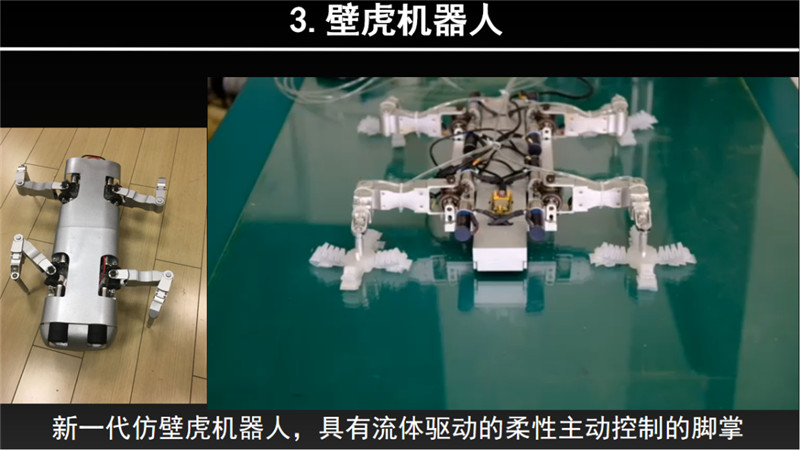
This robot can perfectly replicate gecko locomotion. Moving forward, further research will be carried out onboard space stations to enable it to replace astronauts for spacecraft inspection tasks.
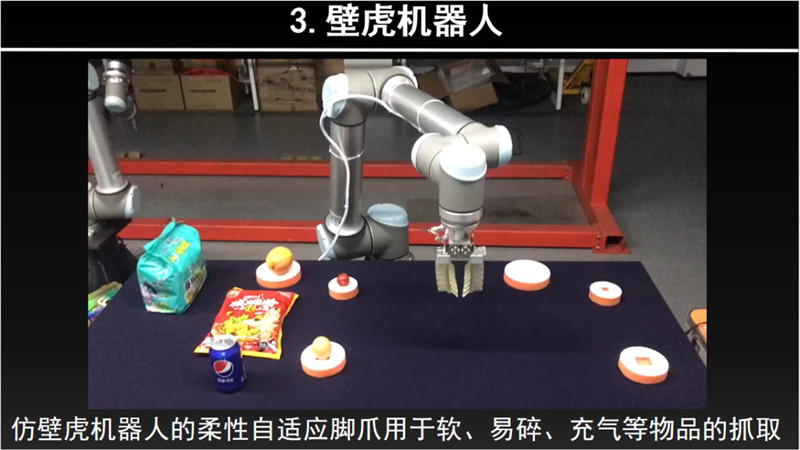
Equipped with claws and adhesive materials, the gripper can gently transport diverse objects without force control. It is even capable of grasping raw eggs, which are highly sensitive to gripping force. This device can reliably handle objects regardless of whether they are soft or hard, heavy or lightweight.